
--- title: >- 3D Printing Services in India: SLA vs SLS vs MJF vs DLP description: >- Compare SLA, SLS, MJF, DLP, FDM and metal additive manufacturing for parts made in India — finish, strength, accuracy, geometry, quantity and lead time decide the right 3D printing technology. date: '2026-07-14' author: Excel Rapidtech Editorial Team coverImage: >- https://excelrapidtech.com/wp-content/uploads/2026/07/3D-printing-technologies-in-India-excel-rapidtech-1568x646.webp keyword: >- sla vs sls vs mjf vs dlp, 3d printing technology comparison, fdm 3d printing, metal additive manufacturing, functional prototypes nylon, 3d printing services india faqs: - q: >- How should I compare the various 3D printing technologies? a: >- Compare different technologies as per use of the part. Finish, strength, accuracy, quantity, lead time, and post-processing should be weighed together. The best option depends upon multiple factors. - q: >- Is the more expensive process always safer? a: >- No. A costly process can still be wrong if the part does not need what that route provides. The safer choice is the route that solves the actual problem with the least downstream friction. - q: >- Should I prioritise speed or final realism? a: >- It depends on the stage. Early concept work often benefits from speed. Customer-facing samples, pilot quantities, and functional tests usually need more realism. - q: >- Can one supplier support multiple technologies on the same project? a: >- Yes. That can help because the supplier keeps the learning from one stage visible in the next stage. It also reduces the need to explain the same file and design history to multiple vendors. metaTitle: 3D Printing Services in India: SLA vs SLS vs MJF ---
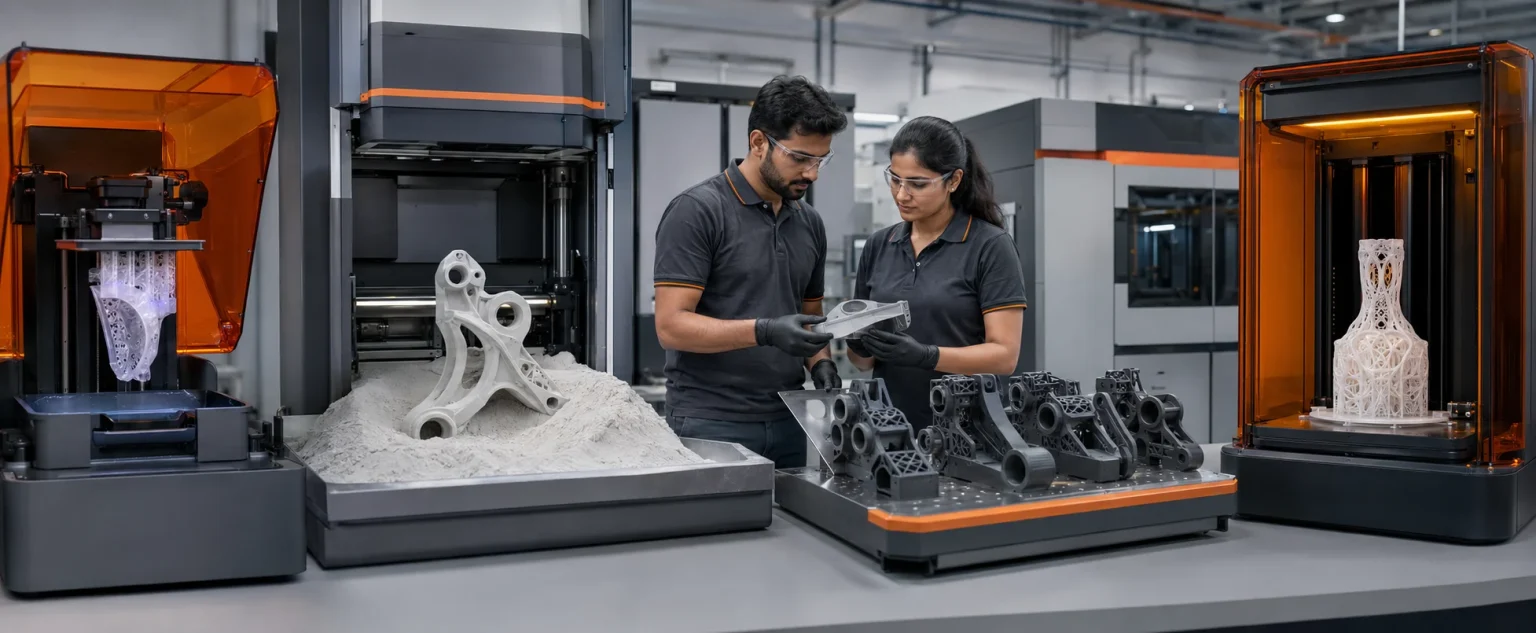
The most suitable 3D printing technology depends on how the part is to be used. SLA and DLP are most suited for detailed and smooth models. SLS and MJF are well suited for stronger end-use parts, light-weight parts, complex shapes, and functional prototypes. FDM remains useful for quick, low-cost concept work, while metal additive manufacturing fits selected metal applications with stricter cost and inspection needs.
The right choice is not about which technology sounds more advanced. It is about finish, strength, accuracy, geometry, quantity, lead time, and how the part will be used after delivery.
Quick Answer
SLA and DLP are most suited for detailed and smooth models. SLS and MJF are well suited for stronger end-use parts, light-weight parts, complex shapes, and functional prototypes. FDM remains useful for quick, low-cost concept work, while metal additive manufacturing fits selected metal applications with stricter cost and inspection needs.
Why Technology Selection Matters
- A visual model must communicate form and finish. A snap-fit assembly must survive handling and repeated movement. A pilot batch must be repeatable enough for review or limited use.
- These attributes point to different technologies, so the choice should be made after discussing and reviewing all attributes.
- Improving one factor often affects another — accuracy, surface finish, material behaviour, build size, repeatability and cost need to be weighed together.
- Early prototypes often need speed; later prototypes require realism.
- A costly process can still be wrong if the part does not need what that route provides. The safer choice is the route that solves the actual problem with the least downstream friction.
How to Compare 3D Printing Technologies
Start with the part in question. A visual model must communicate form and finish. A snap-fit assembly must survive handling and repeated movement. A pilot batch must be repeatable enough for review or limited use. These attributes point to different technologies.
A fair comparison should weigh accuracy, surface finish, material behaviour, build size, repeatability, and cost. Improving one factor often affects another, so choice should be made carefully after discussing and reviewing all attributes.
Where Excel Rapidtech Fits
One supplier with multiple process options can reduce handoff mistakes. An end-to-end 3D printing workflow helps keep design learning visible as the project moves from concept to functional validation — the supplier keeps the learning from one stage visible in the next and reduces the need to explain the same file and design history to multiple vendors.
To compare SLA, SLS, DLP, MJF, FDM or metal additive manufacturing for a specific component, contact Excel Rapid Tech with the CAD file, intended use, quantity, finish expectations and delivery timeline.
Comparison
| Technology | Best used for | Main advantages | Main limitations |
|---|---|---|---|
| SLA | Visual prototypes, fitment check, design verification, mockups, etc. | Smooth surface, sharp detail, high accuracy. | Less durable, deforms under pressure, temperature & UV. |
| DLP | Small detailed parts and compact batch jobs. | Fine details and efficient builds when the part size fits. | Build size and material options can limit industrial use. |
| SLS | Functional, low volume production parts, functional prototypes. | Light weight, durable, high strength, flexible parts, snap fits, hinges, etc. | Slightly grainy surface texture without post processing. |
| MJF | Repeatable parts, low volume parts, functional prototypes. | Good batch consistency, high strength parts. | Slightly grainy surface texture without post processing. |
| FDM | Draft models, large concept parts, fixtures, basic internal checks. | Affordable, fast for rough validation, useful for size and form checks. | Visible layer lines and lower cosmetic quality, low accuracy. |
| Metal additive | Complex metal parts, internal channels, lightweight structures, early metal design trials. | Design freedom for geometry that is difficult to machine. | Higher cost, stricter inspection, and material certification. |
| If the part needs | Start the discussion with | Why |
|---|---|---|
| A smooth cosmetic sample | SLA or DLP | They are usually suitable for visual finish and fine detail. |
| A durable, functional part | SLS or MJF | SLS is well established for parts that need repeated handling, durability, and production grade parts. |
| A quick form study | FDM or SLA | The team can review shape and size without heavy cost. |
| A medium batch of functional parts | MJF or SLS | Batch planning and nesting can improve repeatability and cost. |
| A painted presentation model | SLA | SLA parts are smooth and detailed, giving good surface finish. |
| A metal part with complex internal geometry | Metal additive or CNC review | The supplier should compare manufacturability, cost, and inspection needs. |
Step-by-Step Workflow
Early prototypes often need speed. Later prototypes require realism. A typical progression looks like this:
- Begin with a quick FDM model when the team needs directional learning, speed and low cost for large draft models, fixture concepts and early internal reviews.
- Move to an SLA sample for fitment checks and design validation once fine detail and surface finish matter.
- Test an SLS or MJF functional part when the part must survive repeated handling, durability and production-grade behaviour.
- When quantity increases, finish becomes stricter, or the part starts influencing production decisions, discuss repeatability, inspection, packaging, and the next manufacturing route before approving the job.
- Share the CAD file, intended use, quantity, finish expectations and delivery timeline with the supplier for the technology comparison.
Common Mistakes to Avoid
- Choosing the most familiar process instead of the process that fits the use case.
- Not understanding the technology and material being used / suggested by the supplier.
- Comparing quotes without confirming 3D printing process, material, finish, and delivery assumptions.
- Using a resin visual prototype for a functional test without checking material behaviour.
- Treating post-processing as optional when the buyer or customer will judge the surface.
- Forgetting that the prototype should guide the next engineering decision.
SLA and DLP: When Surface Detail Matters
SLA and DLP are resin-based routes. Teams often choose these when the part must look clean in a review or when fine details matter. These technologies are suitable for appearance models, product shells, fitment check and design verification, etc.
The main limitation is material properties. Resin can be useful for visual and fit checks, but it does not behave like final production polymer in heat, impact, fatigue, or long use conditions. If the part must survive functional testing, the supplier should confirm whether resin is acceptable or whether a nylon, machined, or cast route is preferable.
SLS and MJF: When Functionality Matters
SLS and MJF are often the best choices when the part has a functional job. Nylon parts work well for housings, brackets, ducts, snap fits, jigs and fixtures, assembly checks, etc. These technologies are well suited for complex geometries that cannot be manufactured by any other process. Parts are light weight, strong, durable, behave like production grade parts, handle temperature and pressure, etc.
MJF is often considered when repeatability and batch economics matter. SLS remains a strong option for durable nylon parts and complex forms. The practical comparison should include finish expectations, dimensional needs, material grade, end use application, etc.
FDM: For Low-Cost Concept Models
FDM is useful when speed and cost matter more than accuracy and appearance. Large draft models, fixture concepts, and early internal reviews can often move faster through FDM. It is not the right choice for every presentation model, but it can be a sensible first pass when the team needs directional learning.
Metal Additive Manufacturing
Metal additive manufacturing has a narrower use case. It can help with complex metal features, lightweight structures, internal channels, and fast design learning before a machined or cast route is finalised. It is highly useful for complex geometries that cannot be manufactured through any other process.
What to Measure
Weigh these attributes together for any part: accuracy, surface finish, material behaviour, build size, repeatability, cost, quantity and lead time. Improving one factor often affects another.
At each stage, check the fit against the requirement — a smooth cosmetic sample points to SLA or DLP, a durable functional part to SLS or MJF, a quick form study to FDM or SLA, a medium batch to MJF or SLS, a painted presentation model to SLA, and a metal part with complex internal geometry to metal additive or a CNC review.
Conclusion
The right technology is decided by the part's use case, not by which process sounds more advanced. Start with a quick FDM concept, move to an SLA sample for fitment and design validation, then test an SLS or MJF functional part. When quantity rises or finish becomes stricter, discuss repeatability, inspection and the next manufacturing route before approving the job. One supplier with multiple process options keeps the learning from each stage visible in the next.
Ready to discuss your part?
FAQs
How should I compare the various 3D printing technologies?
Compare different technologies as per use of the part. Finish, strength, accuracy, quantity, lead time, and post-processing should be weighed together. The best option depends upon multiple factors.
Is the more expensive process always safer?
No. A costly process can still be wrong if the part does not need what that route provides. The safer choice is the route that solves the actual problem with the least downstream friction.
Should I prioritise speed or final realism?
It depends on the stage. Early concept work often benefits from speed. Customer-facing samples, pilot quantities, and functional tests usually need more realism.
Can one supplier support multiple technologies on the same project?
Yes. That can help because the supplier keeps the learning from one stage visible in the next stage. It also reduces the need to explain the same file and design history to multiple vendors.
Related Reading
- Which 3D Printing Technology Should You Choose? A Guide for Engineers
- 3D Printing Services in India: Cost, Lead Time and RFQ Checklist
- 3D Printing Services in India: Complete Guide to Technologies, Materials and Applications
- 3D Printing Companies in India: 12 Capabilities Engineering Teams Should Compare
- End-to-End 3D Printing Services for Engineers and Manufacturers