
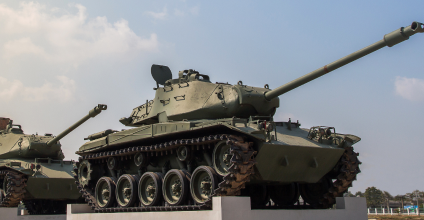
Turn authorised defence equipment designs into physical prototypes, test parts, tooling and low-volume components through a process selected for the mission requirement. Excel Rapidtech supports eligible defence, UAV, electronics and engineering projects with industrial 3D printing, CNC machining, vacuum casting, reverse engineering and post-processing.
Share only information you are authorised to disclose. Contact Excel Rapidtech to establish the project scope and data-handling requirements before transferring controlled files.
What is defence rapid prototyping?
Defence rapid prototyping is the manufacture of development hardware from digital design data for fit checks, ergonomic assessment, environmental preparation, functional trials, system integration, field-support evaluation or limited production. It can cover polymer and metal parts for equipment, vehicles, UAVs, electronics, tools and training systems.
The value comes from shortening the distance between an engineering idea and physical evidence. A CAD model can show interference digitally, but a real assembly reveals access, handling, cable routing, visibility, fastening and maintenance issues. Rapid manufacturing allows teams to test these questions before investing in production tooling or a larger batch.
India’s National Strategy on Additive Manufacturing identifies sectors including electronics and medical devices while encouraging an indigenous innovation and R&D ecosystem for advanced digital manufacturing. It frames additive manufacturing as part of strengthening local industrial capability. Read the Government of India announcement. Defence applications still require programme-specific security, qualification and procurement controls; a national strategy is not a substitute for them.
Defence products and systems we can help prototype
The examples below describe categories that may be technically suitable for prototyping. Project acceptance depends on legal eligibility, authorisation, security sensitivity, export-control considerations, design maturity and Excel Rapidtech’s confirmed capability. No weapon performance, ballistic protection or military certification is implied.
UAV and unmanned-system components
Rapid iteration is especially useful for unmanned aerial and ground platforms because payload, power, sensing and communication packages change frequently. Candidate components include payload enclosures, camera mounts, antenna housings, electronics trays, battery holders, landing-gear concepts, fairings, cable guides, protective covers and ground-test fixtures. Lightweight polymer parts may be reviewed through SLS or MJF, while CNC machining may suit specified metal interfaces.
Rugged electronics enclosures
Defence electronics often need compact packaging, controlled interfaces and service access. Prototypes can help teams assess display housings, communication-device enclosures, connector panels, protective caps, sensor bodies, internal mounting frames and cable-routing features. Environmental sealing, electromagnetic compatibility, flame behaviour and ingress protection are system requirements that must be engineered and tested by the responsible design authority; an enclosure prototype does not prove them automatically.
Vehicle and mobility-system parts
Development requirements may include control housings, brackets, ducts, clips, covers, ergonomic handles, equipment mounts, switch panels and service tools for land or marine platforms. A visual model may be made in resin, a functional nylon component through powder-bed polymer printing, or a metal test piece by CNC machining. Intended load, vibration, temperature and exposure determine the route.
Soldier-system and human-factor models
Physical mock-ups can help evaluate reach, handling, equipment placement, visibility and interface layout. Candidate items may include non-protective equipment housings, mounting accessories, control mock-ups, training aids and ergonomic form studies. Human-factor prototypes should be clearly marked and controlled so that demonstration items are not mistaken for approved operational equipment.
Jigs, fixtures and maintenance aids
Not every high-value defence component becomes part of a fielded system. Assembly locators, drill guides, inspection fixtures, protective covers, test stands, alignment aids and maintenance tools can improve consistency and reduce manual effort. Printed tools can be lightweight and quick to revise; machined inserts can be added at wear points or accurate datums.
Spares and authorised obsolescence support
Long equipment life cycles can create demand for parts whose original tooling or CAD data is unavailable. Reverse engineering may help reconstruct an authorised cover, knob, bracket, duct, clip, tool or other suitable component. The source part’s wear, hidden geometry, original specification and safety relevance must be assessed. Reproduction rights and configuration approval remain with the authorised programme stakeholders.
Training and demonstration models
Non-functional sectioned models, scaled assemblies and handling aids can support technical explanation, maintenance training or stakeholder communication. Colour coding, labels and cutaway geometry can make internal relationships easier to understand. These products should be designed and marked for training use, with sensitive details removed where required.
Excel Rapidtech manufacturing capabilities for defence development
| Capability | Where it can add value | Candidate defence products |
|---|---|---|
| SLA 3D printing | Smooth, detailed visual prototypes | Control models, bezels, detailed housings and displays |
| DLP 3D printing | Small-format resin detail | Buttons, small interfaces, miniature models and connector features |
| SLS 3D printing | Complex functional nylon geometry | UAV housings, ducts, clips, covers and tool bodies |
| MJF 3D printing | Durable nylon parts and small batches | Enclosures, fixtures, mounts and repeated development parts |
| Metal 3D printing | Complex metal development geometry | Compact brackets, specialised hardware and design studies |
| CNC machining | Specified plastics and metals with machined features | Plates, housings, mounts, shafts, brackets and test components |
| Vacuum casting | Repeated polyurethane parts from a master | Covers, seals, grips, housings and demonstration sets |
| Reverse engineering | Recovering authorised geometry | Legacy components, maintenance aids and replacement-part studies |
| Post-processing | Assembly and visual completion | Painting, joining, surface treatment and screen printing |
Selecting a process around mission requirements
3D printing for iteration and complex geometry
Additive manufacturing is useful when the geometry changes frequently, quantity is low or internal complexity makes tooling unattractive. SLA and DLP can support detail-led models. SLS and MJF can support functional polymer parts. Metal additive manufacturing may support complex metal forms. Each route has different anisotropy, surface, support, dimensional and material considerations.
CNC machining for material-specific functional parts
CNC machining removes material from a solid workpiece. It is often chosen when a prototype must use a particular machinable polymer or metal, or when precise holes, threads, faces and datums are important. Geometry should allow tool access and secure workholding. A machined prototype can be production-representative in material but still requires system-level testing.
Vacuum casting for small repeated sets
Vacuum casting uses a master pattern and silicone mould to produce small quantities of polyurethane parts. It can suit equipment covers, grips, seals and presentation assemblies when multiple similar samples are needed before production tooling. The cast material must be selected for the prototype objective and should not be represented as identical to the future moulded material unless evidence supports that statement.
Hybrid manufacturing for complete assemblies
A rugged equipment mock-up might combine a CNC internal frame, printed cable guides, vacuum-cast buttons and a painted outer housing. A tool could combine a lightweight printed body with metal bushings. Hybrid design uses each process where it contributes the most value.
A controlled workflow for defence prototype projects
Establish authority and information classification
Before technical work begins, confirm that the customer has the right to share the design and commission manufacture. Identify any data-handling restrictions, access controls, marking, storage or destruction requirements. Do not send classified, export-controlled or otherwise restricted data through a general website form.
Define the prototype’s role
State whether the item is an appearance model, training aid, integration mock-up, ground-test component, tool, fixture or candidate operational part. Define the environment, loads and interfaces. This prevents an early-stage model from being used outside its intended purpose.
Provide controlled technical data
Supply a revision-identified 3D CAD file and dimensioned drawing for critical features. Include material, quantity, finish, marking, inserts and inspection requirements. For reverse-engineering work, provide ownership authorisation and information about the source part’s condition.
Complete manufacturability review
Excel Rapidtech can examine wall thickness, build orientation, support removal, tool access, internal voids, assembly splits and finishing. The review may recommend modifying a feature, adding machining allowance or changing the process to align with the intended test.
Manufacture, inspect and identify
Parts are produced to the agreed process and specification. Prototype status, revision and use limitations should be identified where appropriate. Required inspection or documentation must be agreed before production.
Evaluate and iterate
The authorised design team records findings and determines the next configuration. When a project progresses toward operational use, qualification, environmental testing, configuration management and supplier controls must progress with it.
What to include in a defence manufacturing RFQ
- Customer organisation and authorised point of contact.
- Confirmation that the data may be shared for quotation and manufacture.
- Part number, revision and project identifier.
- 3D CAD and controlled 2D drawing.
- Quantity and expected repeat demand.
- Intended use and prototype classification.
- Material and property requirements.
- Load, temperature, moisture, chemical, UV and vibration environment.
- Finish, colour, marking, inserts and assembly instructions.
- Inspection, documentation and packaging expectations.
- Data retention, access and confidentiality requirements.
An incomplete RFQ may hide the factor that determines the process. For example, two identical-looking covers may require different materials because one is for a tabletop demonstration and the other is for outdoor integration testing.
Quality, safety and compliance boundaries
Defence landing-page content must be precise about capability. Excel Rapidtech should publish specific security accreditations, quality certifications, customer approvals, material traceability and inspection capacity only after internal verification. Phrases such as “military grade,” “ballistic,” “field proven” or “approved for defence use” require evidence tied to the exact product and programme.
The customer or designated authority remains responsible for system design, hazard assessment, verification, validation, configuration control and approval for use. Excel Rapidtech manufactures to the agreed technical package; it does not convert an unqualified prototype into approved operational equipment through marketing language.
Why consider Excel Rapidtech?
Excel Rapidtech is a New Delhi rapid prototyping and manufacturing service bureau with publicly documented industrial additive equipment. Its E Plus A800 SLA machine provides an 800 × 800 × 550 mm build volume with a stated 100-micron layer thickness. Its EOS P396E SLS machine provides a 340 × 340 × 600 mm envelope with a stated 120-micron layer thickness. Published SLS options include PA12, glass-filled PA12 and black PA11 for different development needs.
The facility also states a vacuum-casting capacity for parts up to 1000 × 700 × 650 mm and material categories that can simulate rigid, transparent, FR and rubber-like requirements. Exact suitability must be confirmed through the current product datasheet and programme specification. Buyers can verify these details on the Excel Rapidtech infrastructure page before a controlled technical review.
This breadth supports process-neutral discussion: a control-panel model, UAV housing, machined equipment bracket and batch of training covers have different requirements. Design for additive manufacturing, authorised reverse engineering and post-processing can be included where appropriate. Security accreditation, programme approval and operational qualification are separate questions that must be verified for the specific procurement.
Frequently asked questions
Does Excel Rapidtech accept confidential defence projects?
Confidentiality and data-handling requirements must be discussed before files are transferred. Project acceptance depends on legal eligibility, the sensitivity of the information and the controls required. Customers should never upload classified or restricted technical data through an ordinary quotation form.
Can you manufacture UAV and drone components?
Excel Rapidtech can review payload housings, electronics enclosures, camera mounts, battery trays, fairings, brackets, landing-gear concepts and ground-support fixtures. Suitability for flight depends on design authority approval, material data, manufacturing controls and testing that are outside a basic prototype quotation.
Can 3D printing be used for defence spare parts?
It can support selected authorised spares, obsolescence studies and replacement-part development, especially at low volumes. The team must assess geometry, material, function, source-part condition and safety relevance. Reproduction rights and platform approval must be established by the customer.
Which process is best for a rugged electronics enclosure?
SLS or MJF may suit a functional nylon prototype, SLA may suit a detailed appearance model, CNC machining may suit a specific engineering plastic or metal, and vacuum casting may suit a small set of repeated samples. Sealing, EMC, flame and environmental performance require separate design and validation.
Can Excel Rapidtech provide low-volume production?
The company supports low-volume manufacturing where the chosen process, material and quality requirements are suitable. Quantity alone does not define the route. Share future demand, repeatability needs, inspection expectations and any procurement controls during the initial review.
Are prototype defence components approved for operational use?
No automatic approval should be assumed. Prototype manufacture provides a physical item to an agreed specification. The responsible authority must complete all required testing, qualification, certification and release processes before operational use.
Start an authorised defence prototype discussion
Contact Excel Rapidtech with a non-sensitive summary of the component, quantity, material, intended use and required process controls. Once project eligibility and data handling are agreed, the team can review the controlled technical package and propose an appropriate manufacturing route.
Primary CTA: Request a Confidential Project Discussion Secondary CTA: Submit a Non-Sensitive RFQ Summary